Recovering Electric and Hybrid Vehicles Safely: A Complete Guide for Modern Vehicle Recovery
Electric vehicle ownership is increasing rapidly across the UK, and recovery services must adapt to new technologies. Recovering electric and hybrid vehicles safely requires specialist knowledge, correct equipment, and trained recovery operators. This article explains how electric and hybrid vehicles differ from conventional vehicles, the risks involved in ev recovery, and why professional vehicle recovery is essential. If you drive an ev or want to understand how roadside recovery works for modern vehicles, this guide is worth reading.
Understanding Electric Vehicle Technology
An electric vehicle uses an electric motor powered by a large battery pack rather than a combustion engine. Some models combine electric drive with traditional fuel systems, but all electric and hybrid vehicles rely on complex electrical systems.
Unlike conventional vehicles, these systems can remain live after shutdown. This creates additional challenges for vehicle recovery, as parts that are live may still carry voltages present long after an incident.
Why Vehicle Recovery Is Different for EVs?
Vehicle recovery for EVs is fundamentally different from recovery involving petrol or diesel vehicles. Instead of focusing only on fuel spillage, recovery operators must manage high-voltage risks.
Electric and hybrid vehicles contain battery systems that operate at DC voltages far higher than standard motor vehicle systems. This introduces an additional risk that must be controlled through training and safety procedures.
High Voltage Risks in EV Recovery
High voltage refers to dc voltages between 60 and 1500. Many modern evs operate at 800 volts, while others sit within voltages between 60 and 1500 volts.
These high-voltage systems increase the risk of electric shock if there is contact with parts that are live. Recovery operators must understand that 1500 volts are referred to as potentially fatal and require strict isolation measures.
How do Recovery Operators Isolate the Vehicle?
Isolation is one of the most important steps in electric vehicle recovery. Recovery operators follow the manufacturer’s instructions to isolate or fully isolate the vehicle battery and related systems on the vehicle.
If the vehicle is damaged, isolation helps prevent thermal runaway and reduces the risk of battery fires. This protects both first responders and roadside recovery teams.
Safety Equipment and PPE for EV Recovery
Working with electric vehicles requires specialist safety equipment. Personal protective equipment such as insulated gloves and visors form part of standard ppe used during ev recovery.
Protective equipment ensures recovery operators can work safely while maintaining a suitable distance from electrical components. This additional safety is essential when dealing with high-voltage systems.
Approved Recovery Methods for Electric Vehicles
Not all recovery methods are suitable for evs. A clear understanding of approved recovery methods is critical to avoid damage to the powertrain.
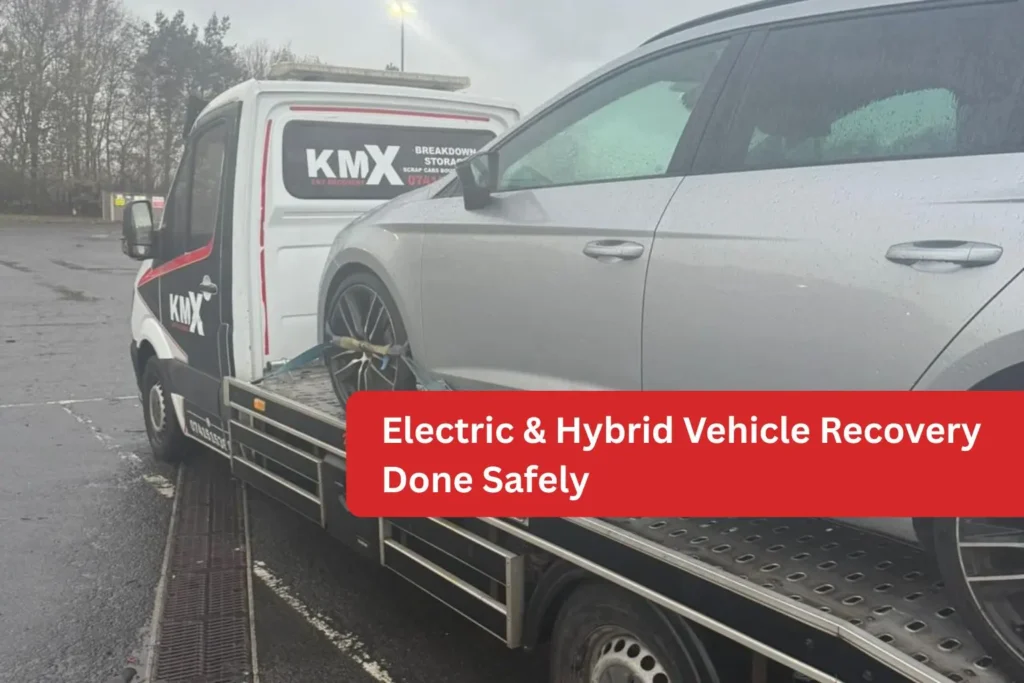
In most cases, the vehicle is loaded onto a recovery vehicle rather than moved using a tow. Using a dolly prevents unintended movement of the electric motor and avoids damage during transport.
Battery Risks and Thermal Runaway
Battery pack damage can lead to battery fires if not managed correctly. There is a potential for the release of explosive gases and harmful liquids if batteries are damaged or incorrectly cooled.
A temperature increase inside the battery system may trigger thermal runaway. Recovery operators must monitor the vehicle battery and manage the risk until the vehicle reaches a safe location or charging point.
EV Recovery After Accidents
When EVs are involved in collisions, the recovery process becomes more complex. If the vehicle is damaged, recovery operators must check that the vehicle has been isolated before loading it onto a recovery vehicle..
First responders work alongside recovery teams to ensure first aid readiness and to reduce the risk of electric shock during roadside operations.
Training and Competence in the Recovery Industry
The recovery industry now requires a higher level of competence for ev recovery. Recovery operators must complete specific training, often aligned with imi standards, to safely handle modern vehicles.
Evs require continuous education due to evolving technology. Training and equipment ensure operators understand the risks associated with these vehicles and can work safely.
Why Professional EV Recovery Matters?
Electric vehicle recovery should never be attempted without proper knowledge. Vehicles without correct handling can pose a danger to the public and roadside teams.
Professional recovery operators apply risk management, safety procedures, and industry best practices to ensure working with electric vehicles is safe and controlled.
Key things to remember
- Electric vehicles operate at high voltage levels that require specialist handling
- Vehicle recovery for evs is different from conventional vehicles
- Battery systems must be isolated before movement of the vehicle
- PPE and safety equipment reduce the risk of electric shock
- Approved recovery methods protect the powertrain and battery pack
- Training and competence are essential for safe ev recovery
- Professional recovery operators protect drivers, first responders, and the public