
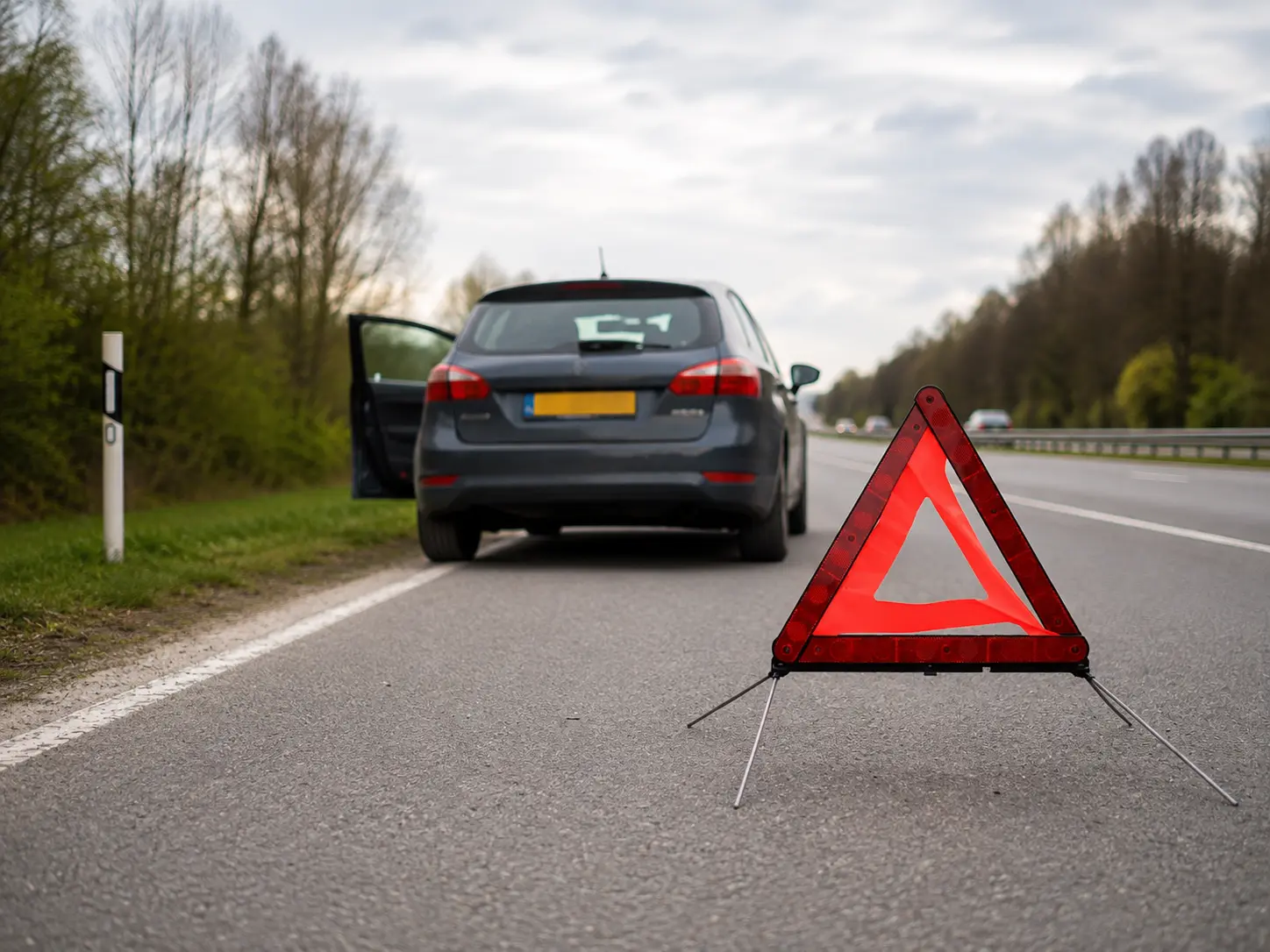
When your car breaks down on a high speed road, your immediate decisions can make a significant difference to your...
Choosing the wrong way to tow a car can turn a straightforward breakdown into an expensive gearbox repair. Automatic and manual vehicles do not always respond in the same way when their wheels rotate during recovery, so the safest method depends on the transmission type, drivetrain and manufacturer instructions.
This guide explains when you can tow an automatic car, why a platform transporter is often recommended, how towing a manual differs and what a professional technician checks before moving your vehicle. It is worth reading before a breakdown so you know what information to provide and which recovery method is safest for your car.
The transmission connects the engine to the drive wheels and controls how power is delivered to the road. In a manual car, the driver uses a clutch and manual gear selection to connect or disconnect the engine from the gearbox. An automatic car uses internal hydraulic pressure, clutches, electronic controls and, in many cases, a torque converter to perform this work.
These differences matter when a vehicle is being towed. Even if the engine is switched off, the wheels may still rotate shafts and internal components inside the transmission. Some components need engine-driven lubrication, so they may move without receiving enough oil. This can generate heat, wear and damage to the transmission.
The correct recovery method therefore depends on whether the vehicle is manual or automatic, which wheels are powered and what the car manufacturer allows. Two cars that look similar may need completely different treatment because their gearboxes and drivetrains are engineered differently.
Modern cars can also create practical complications that have little to do with the visible fault. Electronic parking brakes, stop-start systems and electrically operated gear selectors may not release normally when the battery is completely flat. Some vehicles have a manual release procedure, but it should only be used in line with the handbook. Forcing the selector, steering or parking brake can create a second problem before recovery even begins.
The safest decision is based on the complete vehicle, not only the label on the gear lever. A conventional automatic, DSG, hybrid-style transmission and continuously variable transmission may each have different instructions. When the exact design is unknown, keeping the drive wheels off the ground prevents unnecessary rotation and gives the technician greater control while loading.
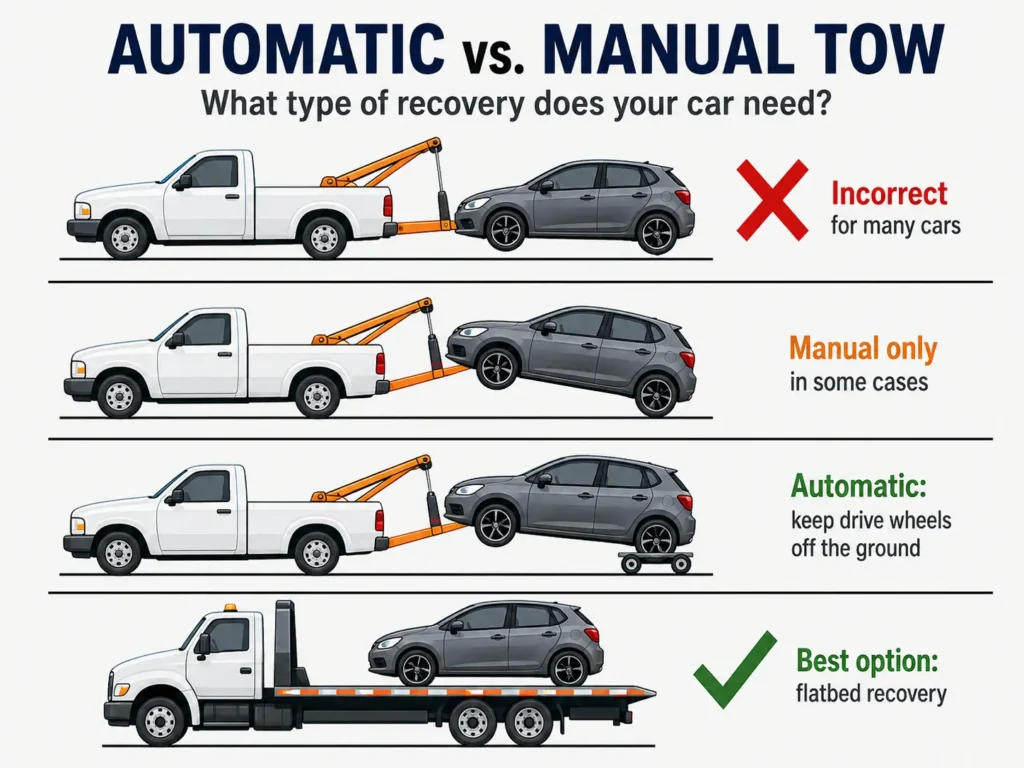
It may be possible to tow an automatic car for a very short distance, but only when the owner’s manual specifically allows it. The instructions may limit the speed, mileage and position of the gear selector. Some manufacturers permit an automatic car in neutral to be moved slowly, while others state that all driven wheels must remain off the ground.
Towing an automatic with its drive wheels on the ground can be risky because the gearbox may continue to rotate while its normal lubrication system is inactive. Placing the selector in neutral does not automatically disconnect every internal part. This is why professional recovery providers normally prefer full-load transport for a car with an automatic transmission.
Always check the owner’s manual before attempting to tow an automatic transmission. If the guidance is unavailable, unclear or cannot be followed safely, use a suitable vehicle recovery service. The cost of proper car recovery is normally far lower than repairing transmission damage caused by an unsuitable tow.
An automatic gearbox relies on transmission fluid to lubricate, cool and operate its internal parts. In many vehicles, the fluid pump works properly only when the internal combustion engine is running. If the car is towed with the drive wheels turning and the engine switched off, some parts may still rotate without enough lubrication.
This can cause heat to build inside the gearbox and may damage bearings, seals, clutches or other internal components. Continuously variable transmissions, DSG units and some modern automatic systems can be especially sensitive because their design and lubrication requirements differ from those of older gearboxes.
The distance does not have to be extremely long to cause serious damage. A technician should never assume that every automatic vehicle can be pulled in neutral. When towing an automatic, the safest choice is often to lift the drive axle or place the entire vehicle on a transport platform.
Even where limited towing is permitted, the instructions may specify a low maximum speed and distance. Exceeding either limit could prevent the gearbox from being lubricated correctly. If the transmission has already failed or lost fluid, the manufacturer’s normal towing allowance may no longer be safe.
Towing a manual car is often more straightforward, but it is not automatically risk free. With a traditional manual gearbox or manual transmission placed in neutral, the engine is generally disconnected from the driven wheels. This may reduce the risk of gearbox damage compared with towing an automatic car.
However, the vehicle handbook must still be checked. Some modern manual vehicles have electronic parking brakes, all-wheel-drive systems or other features that affect recovery. The steering lock, brake condition and clutch should also be considered before the car is towed.
The person controlling a manual vehicle on a tow rope must understand that the engine may be off, making the steering heavier and the brake less responsive. They must avoid sudden braking and should not slip the clutch or select a manual gear while the car is being towed.
Towing with a rope or tow bar is also unsuitable in many breakdown situations. There must be a competent driver in both vehicles, the steering and braking system must work correctly, and the route must be safe. On a motorway, dual carriageway or busy urban road, professional recovery is significantly safer.
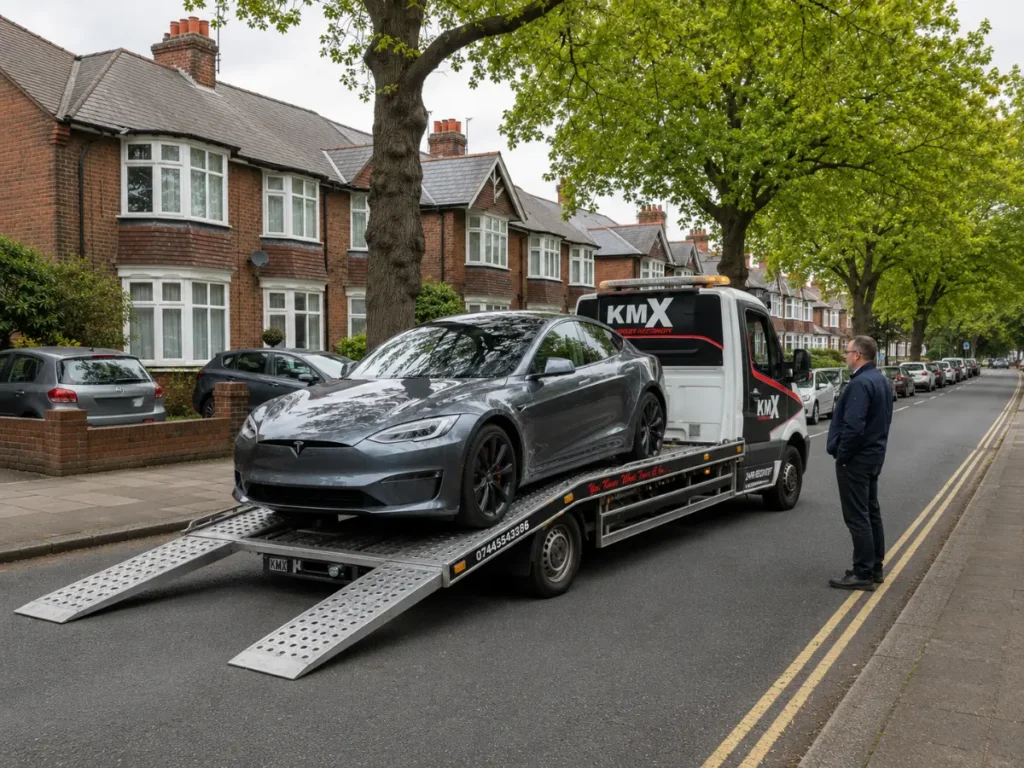
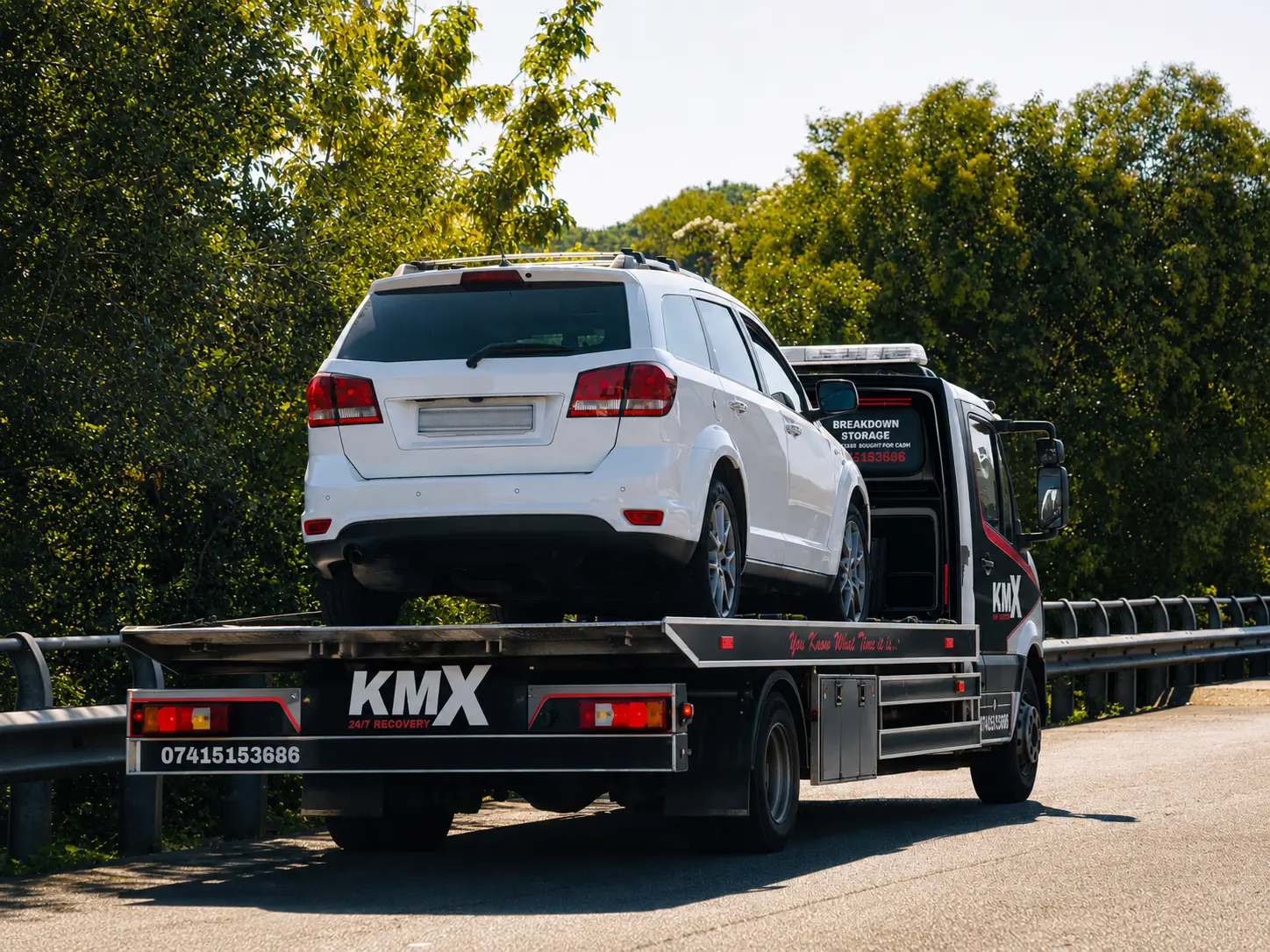
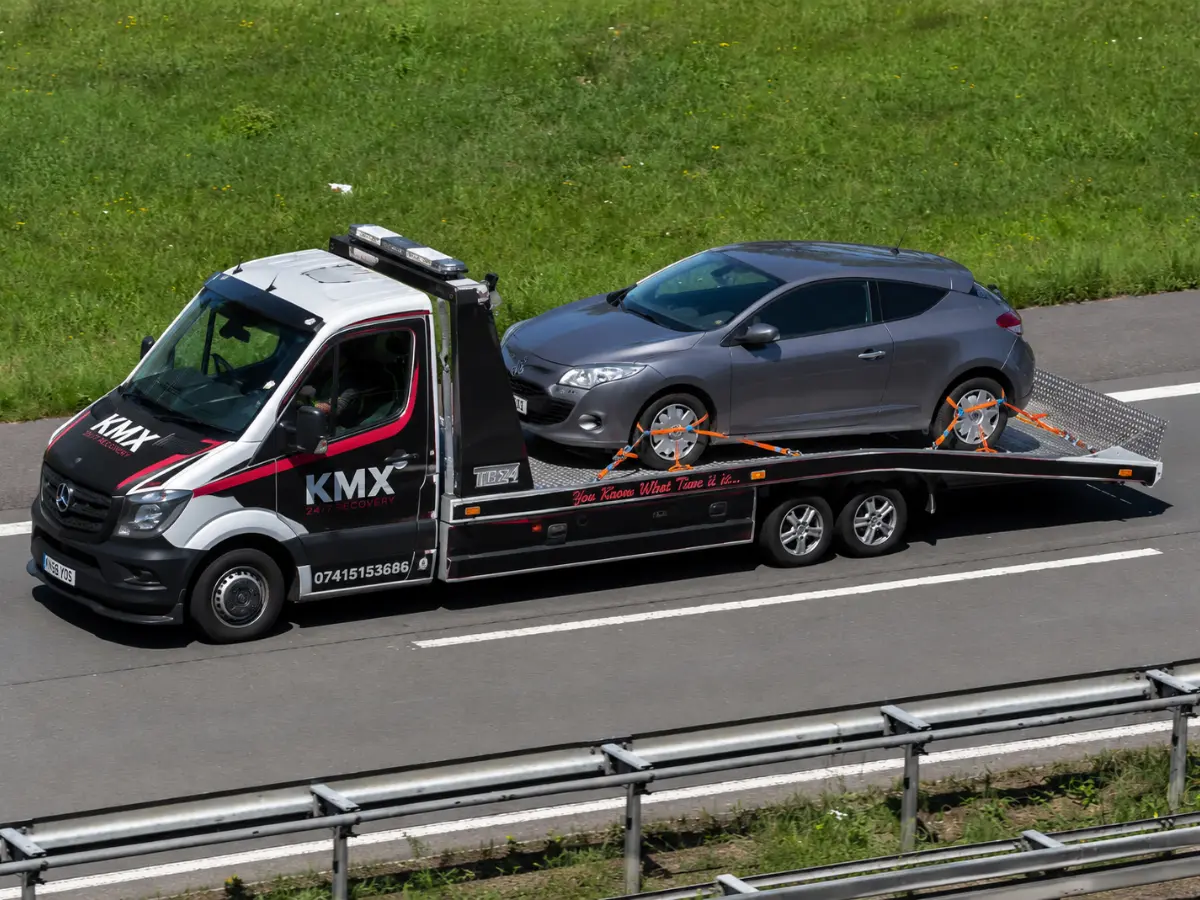
A full-load transporter is usually the safest choice when the transmission condition is unknown, the vehicle cannot be placed in neutral or the manufacturer does not permit its drive axle to rotate. Using a flatbed keeps all four wheels off the ground, preventing unwanted movement through the gearbox and drivetrain.
Full-load recovery is also suitable when the car has accident damage, seized brakes, broken suspension or steering problems. The recovery vehicle uses a winch to load the car onto a level platform, after which it is secured for transport. This allows the operator to tow the vehicle without relying on its braking system or steering.
This method may also be required for an automatic vehicle, electric car, low-clearance model, 4×4 or car with an automatic transmission. Although loading can take slightly longer than a basic wheel-lift tow, it greatly reduces the chance of mechanical damage during recovery.
Using a flatbed is particularly sensible when no reliable towing instructions are available. The whole vehicle remains supported, there is no need for the wheels to rotate on the road, and the recovery team can transport it directly to a garage, dealership or home address.
A tow dolly supports one set of wheels while the other set remains on the road. A wheel-lift performs a similar function by lifting either the front or rear of the vehicle. These methods can be safe when the technician lifts the correct drive wheels off the ground and the remaining wheels are suitable to roll.
For a front-wheel-drive automatic car, lifting the front wheels may prevent the automatic transmission from turning. For a rear-wheel-drive model, the rear wheels may need to be lifted instead. However, using a dolly is not suitable for every vehicle, particularly where four-wheel drive or electronic systems connect both axles.
The technician must confirm the drivetrain before using a tow dolly. If there is any doubt, using a flatbed is the better option. A vehicle without clear manufacturer instructions should not be treated as safe simply because the gear selector moves into neutral.
A tow dolly may also be unsuitable if the remaining wheels, tyres or suspension are damaged. In these situations, allowing part of the vehicle weight to remain on the road could worsen the fault or make the vehicle unstable during transport.
Many 4×4 and SUV models send power to all four wheels, either permanently or when the system detects wheel slip. If only one axle is raised and the other wheels remain on the ground, the drivetrain may still rotate and place stress on the gearbox, transfer case or differentials.
For this reason, many four-wheel-drive vehicles need all wheels off the ground. A full-load transporter or a wheel-lift combined with an additional dolly may be required. The operator should also consider the extra weight, ground clearance and approved recovery points of larger SUVs.
Not every SUV is a 4×4, and not every four-wheel-drive system works in the same way. The vehicle make, model, year and transmission type should be confirmed before dispatch. This allows the recovery service to send equipment that can support the weight of the vehicle and move it without damaging the drivetrain.
Some systems can be switched into a dedicated transport or recovery mode, while others require specific mechanical steps. These procedures should never be guessed. The wrong approach can damage the transfer system even when the main automatic gearbox appears to be in neutral.
Before attempting to tow car models of any type, the technician should identify whether the vehicle is automatic or manual, front-wheel drive, rear-wheel drive or all-wheel drive. They should also check whether the selector can move into neutral, whether the brake releases and whether the steering can be unlocked.
The recovery operator should ask what happened before the breakdown. A failed gearbox, damaged wheel, locked brake or loss of transmission fluid may make an ordinary tow unsafe. If the car will not roll freely, dragging it can damage the tyres, suspension and road surface as well as the vehicle itself.
A professional should then select the appropriate tow vehicle and explain the plan before loading. This may involve a loading platform, wheel-lift, tow dolly or specialist skates. Good recovery is not simply about moving the car. It is about protecting the vehicle throughout the journey.
The operator may also inspect the vehicle’s approved towing points. Attaching a cable or tow bar to the wrong area can damage bodywork, suspension or underbody components. This is particularly important for low vehicles, accident-damaged cars and models fitted with plastic undertrays.
Vehicle weight affects which recovery truck, tow bar, winch and securing equipment can be used safely. A small hatchback and a large SUV may both have an automatic gearbox, but they can require different load capacities. The combined weight must remain within the recovery vehicle’s legal and technical limits.
Extra weight from luggage, tools or commercial equipment may also matter, particularly for a van or heavily loaded 4×4. The operator needs accurate information during booking so the correct truck can be dispatched. Sending an undersized tow vehicle can delay the recovery and create additional safety risks.
Vehicle weight also matters when towing a trailer, although trailer towing is different from breakdown recovery. A car may be capable of pulling a trailer under normal driving conditions but still require full-load transport when it breaks down. Its towing capacity does not indicate how the vehicle itself should be recovered.
The distribution of weight is also important. A damaged axle, broken suspension component or heavily loaded boot may affect how the car sits during loading. The recovery team may need to reposition equipment or use extra securing points to transport the vehicle safely.
When requesting recovery, provide the registration, exact location, vehicle type and whether the car is manual or automatic. Mention any warning lights, gearbox symptoms, accident damage or locked wheels. If you have breakdown cover, check whether it includes roadside assistance, local transport or onward recovery.
Remove valuables and collect anything you may need before the vehicle is loaded. Make sure passengers wait in a safe position away from traffic. Do not stand between the car and the recovery truck, and follow the operator’s instructions during loading.
You should also tell the operator where the vehicle needs to go, such as your home, a local garage or a specialist transmission repair centre. Accurate information helps the recovery provider choose the safest equipment, avoid delays and transport the vehicle without further damage.
Avoid attempting to force an automatic selector into neutral, release an electronic parking brake or disconnect drivetrain components unless the handbook provides a clear procedure. Waiting for suitable recovery equipment is normally safer than creating additional damage while trying to make the car easier to tow.
When your car breaks down on a high speed road, your immediate decisions can make a significant difference to your...
Choosing the wrong way to tow a car can turn a straightforward breakdown into an expensive gearbox repair. Automatic and...
A vehicle breakdown can happen at the worst possible time, whether you are in Bury town centre, travelling towards Manchester...
A breakdown is inconvenient at any time, but it can become far more stressful during a bank holiday when roads...
Get in touch with our friendly team whether you’re a car-trader or someone in need, we’re here to help!
0161 524 1047
hey@kmxrecovery.co.uk