
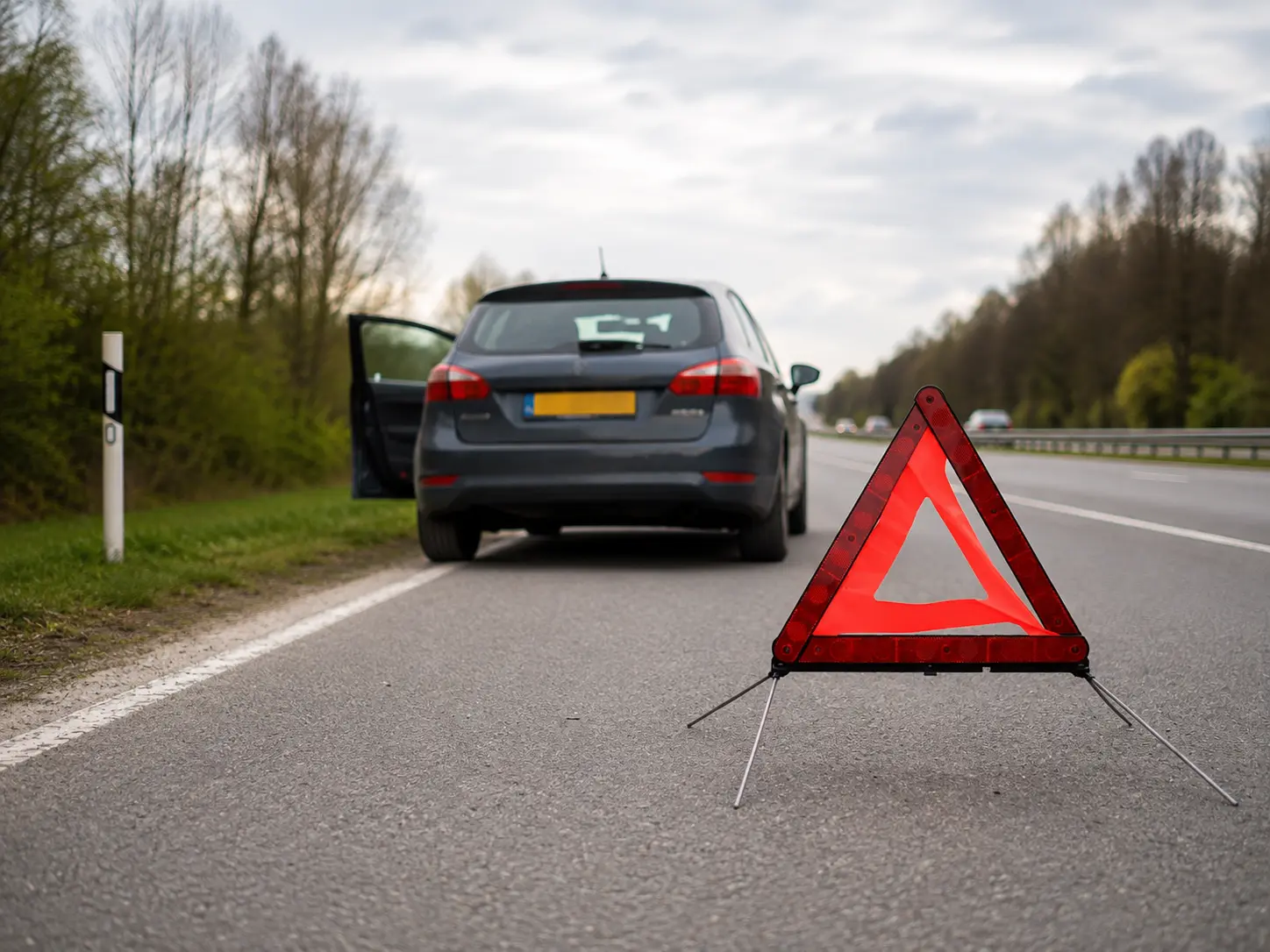
When your car breaks down on a high speed road, your immediate decisions can make a significant difference to your...
A vehicle breakdown can happen at the worst possible time, whether you are in Bury town centre, travelling towards Manchester or using the M60 or M66. Knowing how car recovery works can make the situation safer and less stressful. This guide explains the recovery process, what happens when you call for help, how a specialist is dispatched and how to prepare while assistance is on the way.
Your first priority during a breakdown is safety. Slow down carefully, switch on your hazard lights and move well away from moving traffic where possible. On a normal road, stop in a visible position with enough space for a recovery truck to approach and load the vehicle safely.
Once stopped, assess the situation without placing yourself or your passengers at risk. If the car is in a dangerous position, leave it only when safe and stand away from the carriageway. You can then call for help and explain that you need breakdown recovery in Bury, giving your exact location and direction of travel.
When you call for car recovery, the operator will ask for your location, vehicle make and model, the symptoms of the fault and the number of passengers. They may also ask whether you are blocking traffic or stopped on a motorway. These details help dispatch the correct recovery vehicle without unnecessary delay.
You should receive an estimated arrival time or realistic ETA based on traffic, availability and your position across Bury. This is what happens when you call: the provider checks your vehicle needs, records your chosen destination and assigns an appropriate driver.
When the recovery driver arrives, they will assess the situation before attempting repairs or moving the car. They may ask what happened before the breakdown, whether warning lights appeared and whether the engine will start. This helps the recovery team decide whether roadside assistance is possible or a tow is required.
Common roadside breakdowns include flat batteries, punctures and minor electrical issues. A jump start or safe wheel changes may get you back on the road. However, professional recovery means avoiding temporary fixes when they could damage the vehicle or put people at risk.
Not every fault requires full transport. If the problem is straightforward and conditions are safe, it may be resolved at the roadside. Flat batteries can sometimes be handled with a jump start, while certain tyre problems may be fixed safely at the scene.
Repairs at the scene have limits. Serious mechanical faults, accident damage, steering problems or a car that will not roll normally usually require a recovery truck. A reliable provider will transport the car rather than attempt an unsafe repair simply to get you back on the road quickly.
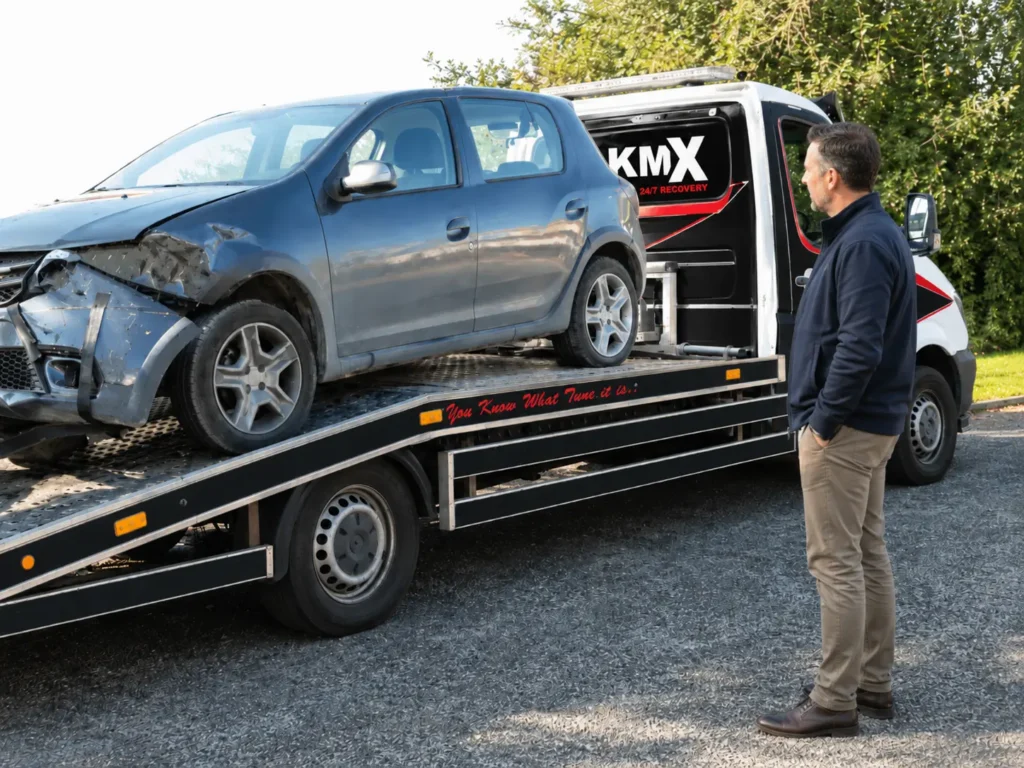
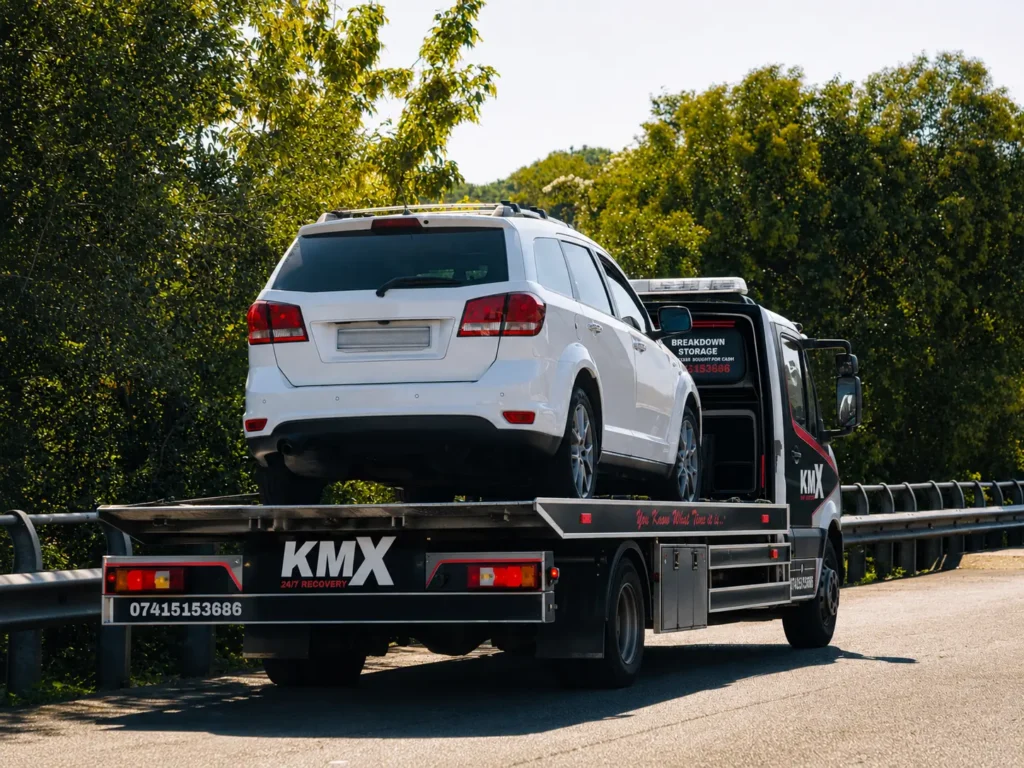
A recovery service will usually tow the vehicle when it cannot be repaired safely or driven without causing further damage. The driver will position the recovery vehicle, secure the car with suitable equipment and check that it is stable before transport. This stage should be clearly explained.
Before loading, remove valuables and anything you may need during the journey. Tell the recovery drivers about damaged wheels, low suspension, locked steering or modifications that may affect loading. The vehicle recovery service can then choose the safest method to transport the vehicle.
A motorway breakdown requires extra care because traffic is moving at high speed. If possible, leave at the next exit or stop in an emergency refuge area. On the hard shoulder, move as far left as possible, use your hazard lights and move away from traffic.
Passengers should exit through the side away from the carriageway when it is safe and wait behind a barrier. When requesting emergency breakdown recovery, explain whether you are on the M60, M66 or another nearby route, including your direction and closest marker. Accurate information supports faster dispatch.
Car recovery services are not limited to standard family cars. Depending on equipment and weight limits, a professional recovery provider may transport small vans, courier vehicles, 4x4s and other light commercial models. The correct recovery vehicle must be selected when booking.
Explain whether you have a car, van, 4×4 or specialist model. Mention underground parking, narrow access, accident damage or wheels that will not turn. This allows the recovery service to send suitable equipment and reduces delays when the driver arrives.
Response time depends on traffic, demand, weather, the breakdown location and driver availability. A problem near central Bury may be easier to reach than one on a congested section of the M60. Local knowledge of key routes across Greater Manchester helps drivers plan an efficient journey.
A reliable recovery provider should give a realistic ETA rather than make an impossible promise. Provide landmarks, junction numbers and your direction of travel so the team can reach you. Rapid response matters, but accurate dispatch and safe driving remain the priority.
If the fault cannot be repaired, the recovery service can tow the vehicle to a local garage, your home address, a dealership or another chosen location. The distance and price may depend on your breakdown cover and whether you require local recovery or national breakdown transport.
Vehicle recovery in Bury may also involve transport towards Manchester, Rochdale, Wigan, Lancashire or elsewhere across Greater Manchester. Confirm the destination, competitive pricing and passenger arrangements before loading, particularly if several people are travelling with you.
Keep your phone charged, save the number of a reliable recovery provider and carry your registration, insurance details and breakdown cover information. A reflective jacket, torch and portable charger can also make an unexpected incident easier to manage while waiting for the team.
Regular servicing supports a reliable vehicle, although it cannot prevent every fault. Check tyre condition, fluids and battery health before longer journeys. Knowing who to contact for recovery near the Bury area means you can call for help quickly and make the experience more manageable.
Put safety first, use your hazard lights and move away from traffic.
Give the operator your exact location, direction of travel and car details.
Never attempt repairs beside live motorway lanes or on the carriageway.
Explain whether you require roadside assistance or full vehicle recovery.
Remove valuables and report existing damage before the car is loaded.
Confirm the destination, price and passenger arrangements before the tow.
Keep assistance contact details and basic emergency equipment in your car.
When your car breaks down on a high speed road, your immediate decisions can make a significant difference to your...
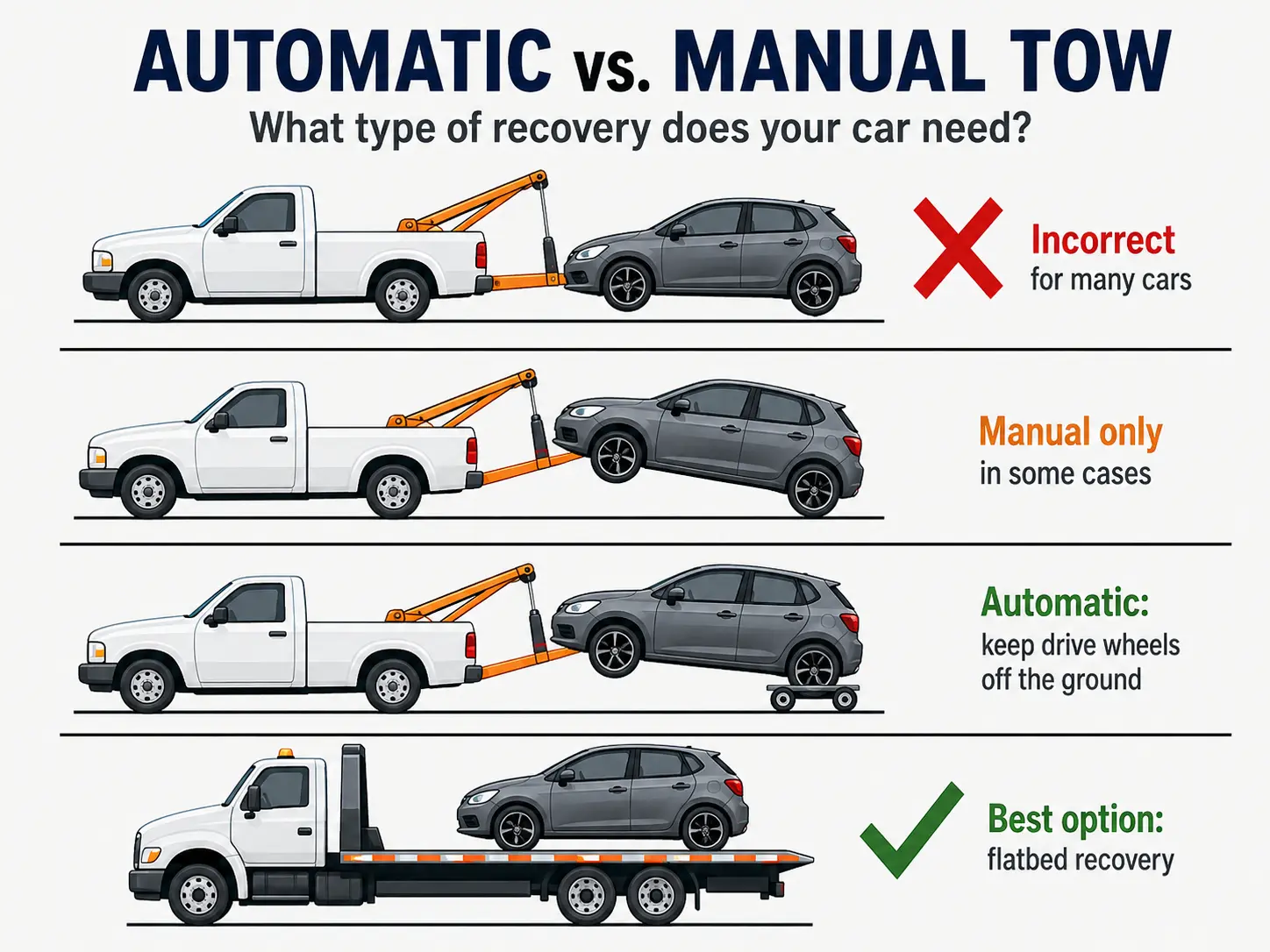
Choosing the wrong way to tow a car can turn a straightforward breakdown into an expensive gearbox repair. Automatic and...
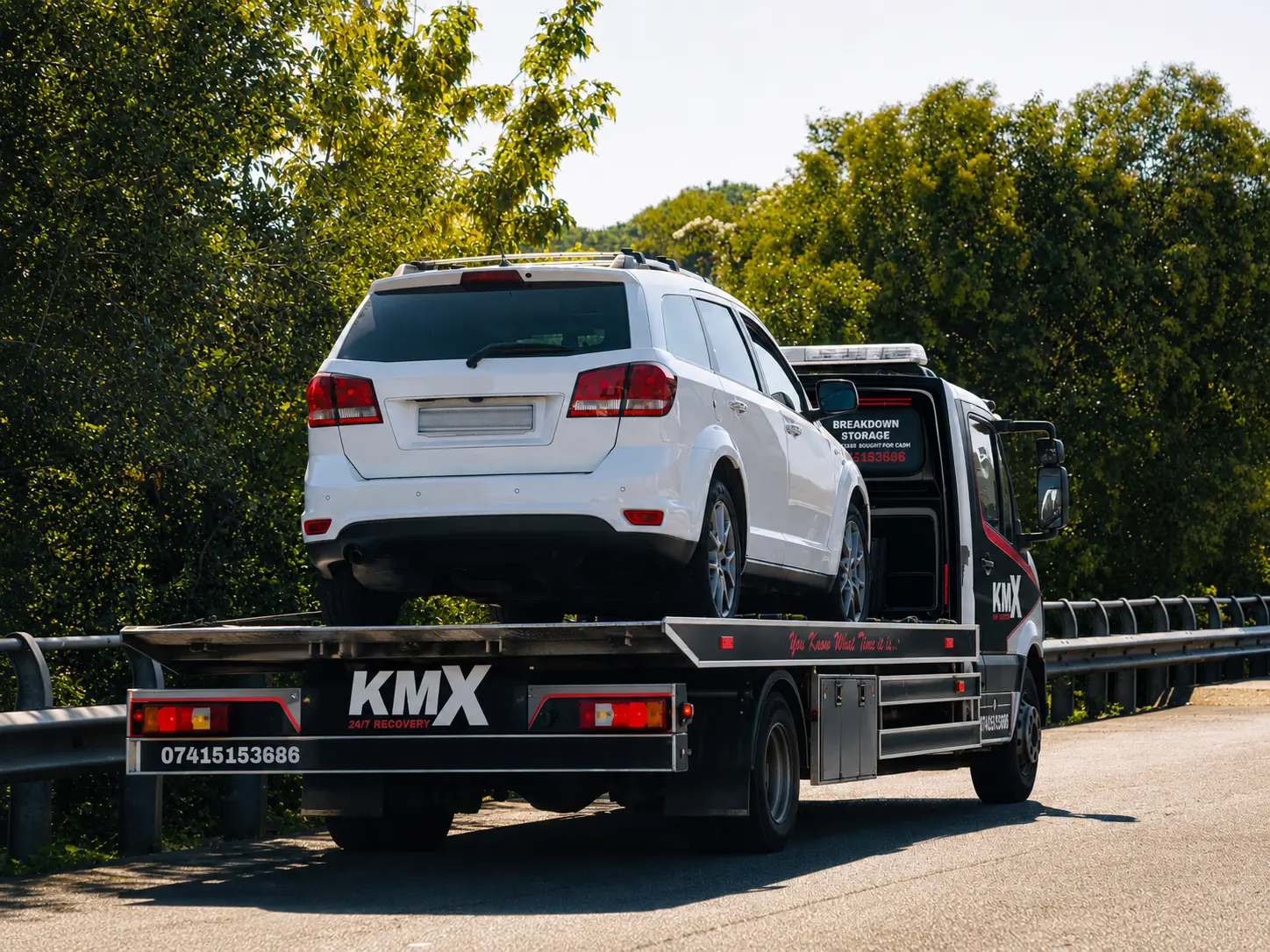
A vehicle breakdown can happen at the worst possible time, whether you are in Bury town centre, travelling towards Manchester...
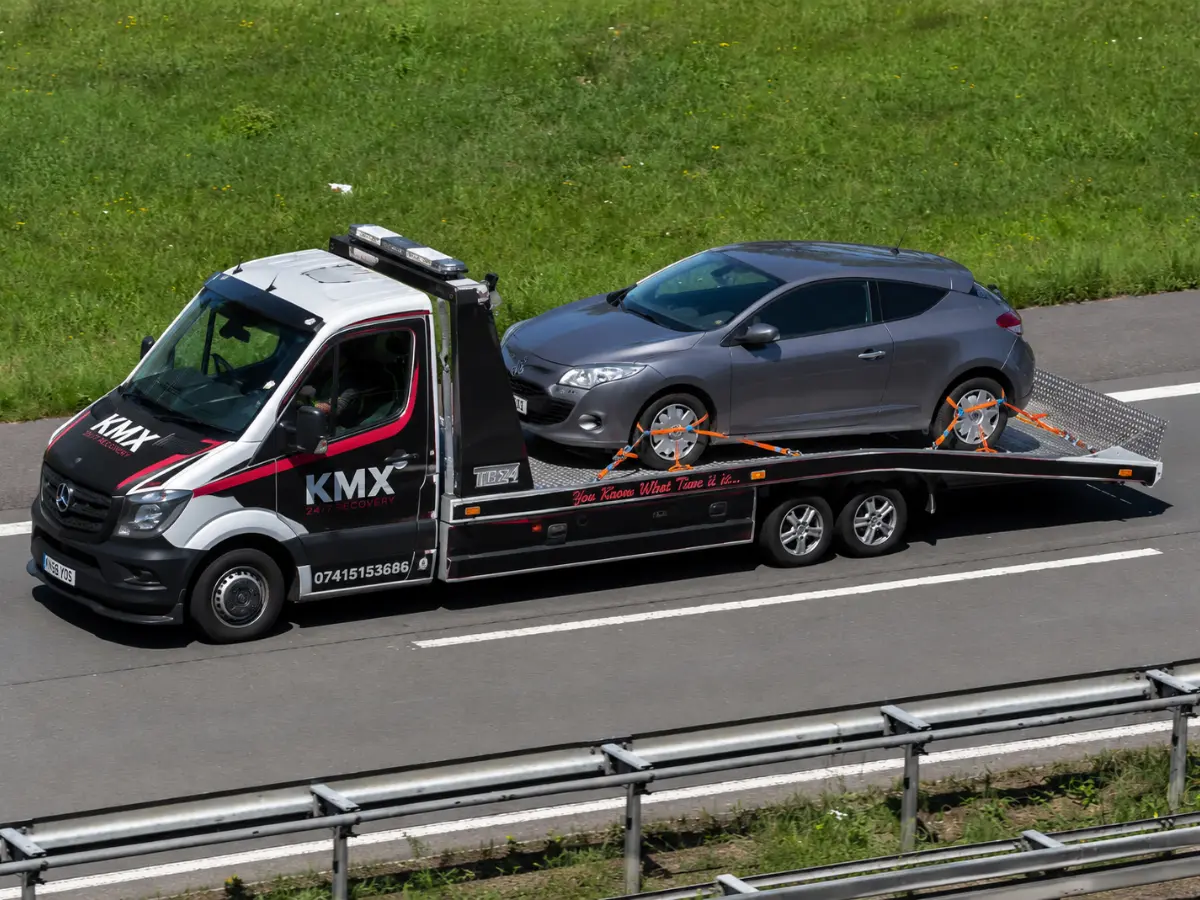
A breakdown is inconvenient at any time, but it can become far more stressful during a bank holiday when roads...
Get in touch with our friendly team whether you’re a car-trader or someone in need, we’re here to help!
0161 524 1047
hey@kmxrecovery.co.uk