
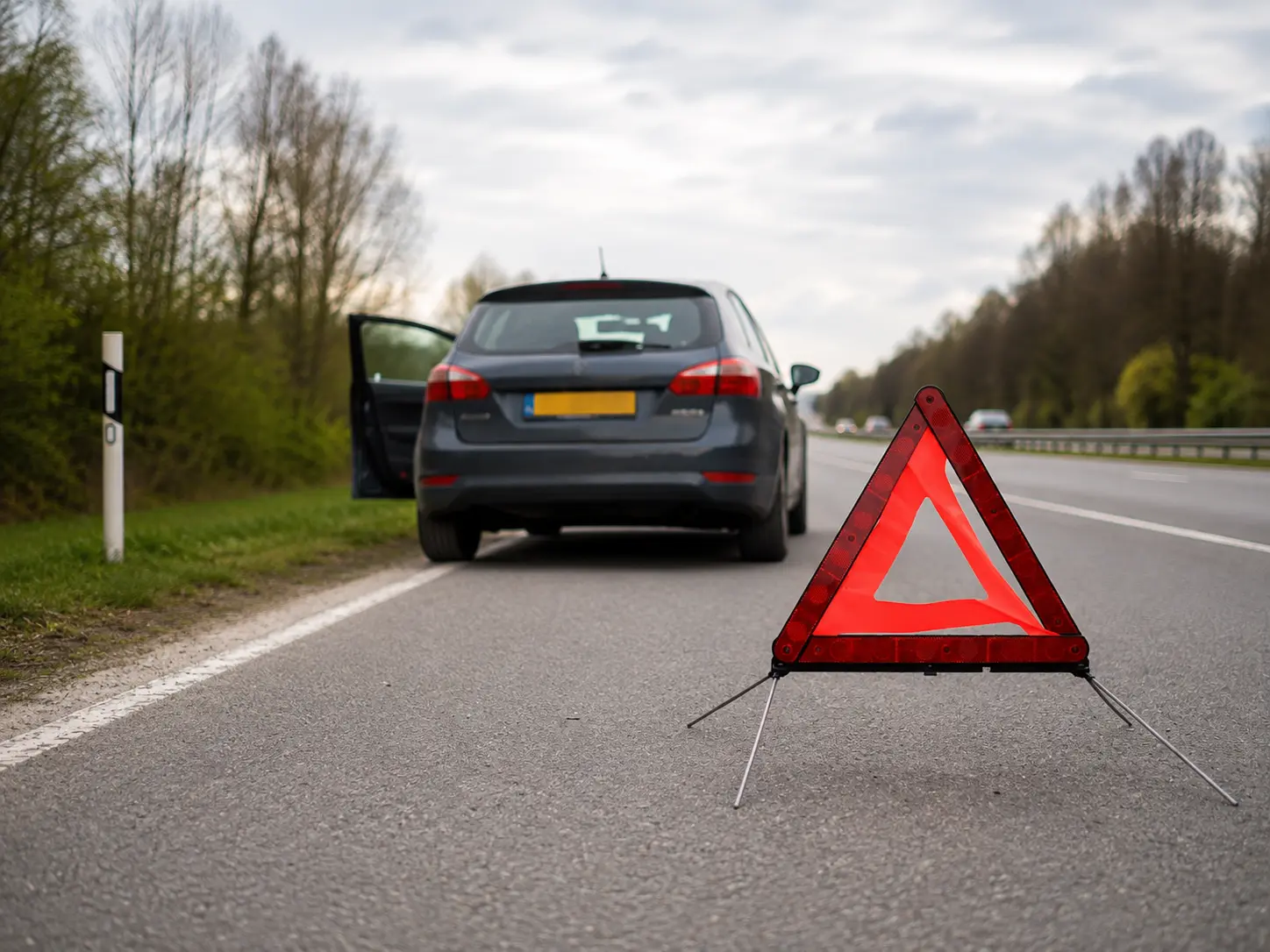
When your car breaks down on a high speed road, your immediate decisions can make a significant difference to your...
When your car breaks down on a high speed road, your immediate decisions can make a significant difference to your safety. Fast moving traffic, limited stopping space and poor visibility can quickly turn a routine breakdown into a serious hazard.
This guide explains what to do during breakdowns and incidents on a dual carriageway, conventional motorway or smart motorway. It covers where to stop, when to leave the vehicle, how to call for help and what information your breakdown provider or the emergency services will need.
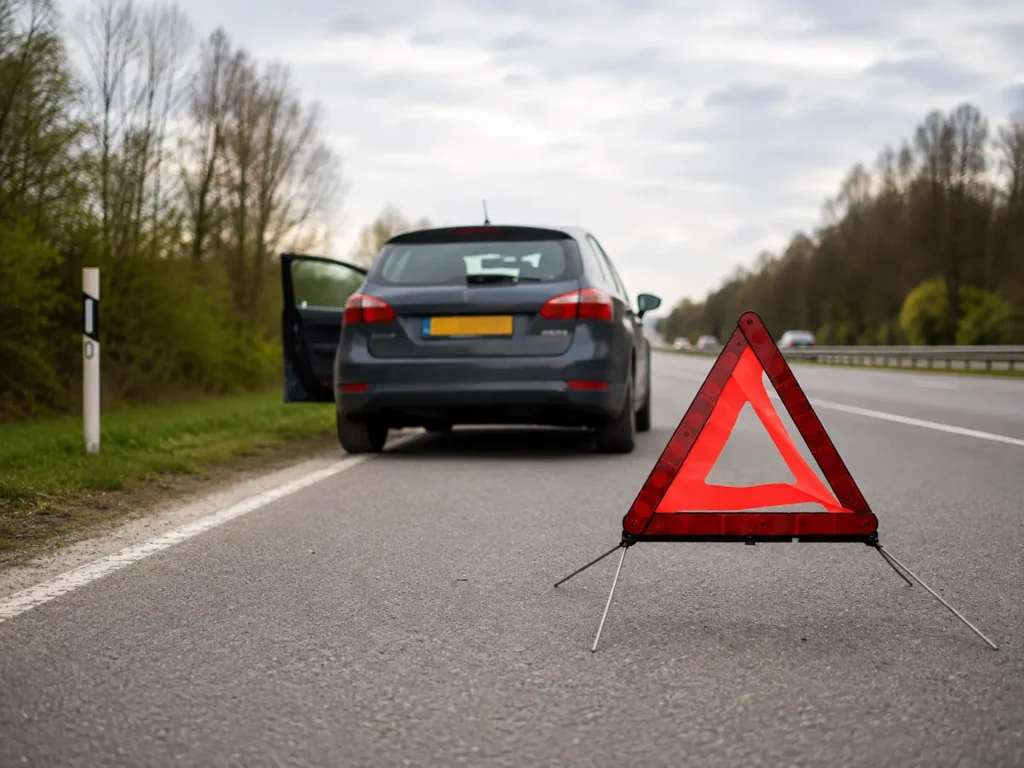
If you notice a warning light, unusual noise, loss of power or another sign of mechanical trouble, avoid braking suddenly. Switch on your hazard lights and try to move towards the left as smoothly as possible. If your vehicle can continue safely, aim for the next exit, service area, lay by or another place of relative safety.
Keep control of the vehicle and avoid making sudden movements across lanes. Your goal is to position your vehicle away from moving traffic without creating an additional hazard for other road users. On a high speed road, even a few extra metres away from the main carriageway can provide valuable protection.
If the car breaks down completely and you cannot reach the left side, stay in your vehicle with your seat belt fastened, switch on your hazard warning lights and call 999 immediately. Tell the operator that your vehicle is stopped in a live lane and ask for the police. Do not attempt to cross lanes or push the car while traffic is passing.
When a breakdown occurs on a dual carriageway, pull over as far to the left as possible. Look for a lay by, slip road, wide verge or another safe place that separates you from the main flow of traffic. Stop along the edge of the road rather than remaining partly within the lane.
.
Once stopped, switch on your hazard lights. If it is dark, foggy or visibility is poor, keep your sidelights on as well. Turn the front wheels towards the left so that the vehicle is less likely to move into the carriageway if it is struck from behind or begins to roll.
Do not stop near a bend, hill crest or another location where approaching drivers may struggle to see you. When possible, pull over far enough to create space between your vehicle and moving traffic. The safest available stopping point may be beyond the immediate location where the fault first appears.
If you break down on a conventional motorway, move onto the hard shoulder and stop as far to the left as possible. Try to stop near an emergency telephone, but do not continue driving if doing so could cause further damage or place you at risk. Switch on your hazard warning lights as soon as you begin slowing down.
Position your vehicle with its wheels turned to the left. Leave the car through the left hand door when it is safe to leave the vehicle, and ask passengers to do the same. Move well away from the car and stand behind the safety barrier where one is present. Never stand between the vehicle and moving traffic.
Do not remain on the hard shoulder beside your car or attempt roadside repairs yourself. The hard shoulder is still a dangerous environment, particularly when large vehicles pass at speed. Wait in a safe place until breakdown recovery or the emergency services arrive.
A smart motorway may not have a permanent hard shoulder. If your vehicle develops a fault but can still move, switch on your hazard lights and leave at the next exit. Alternatively, follow signs towards an emergency refuge area, motorway service area or another safe stopping point.
An emergency area is usually set back from the live lanes and identified by blue signs featuring an orange SOS telephone symbol. Once inside, stop as far to the left as possible and turn on your hazard warning lights. Use the emergency telephone to contact National Highways and follow the operator’s instructions before leaving the emergency area.
If you cannot reach an emergency area and the vehicle stops in a live lane, keep your seat belt fastened if it is not safe to leave. Switch on your hazard lights, call 999 and ask for the police. If you can exit safely through the left hand door and get behind a barrier, move away from your vehicle and the carriageway.
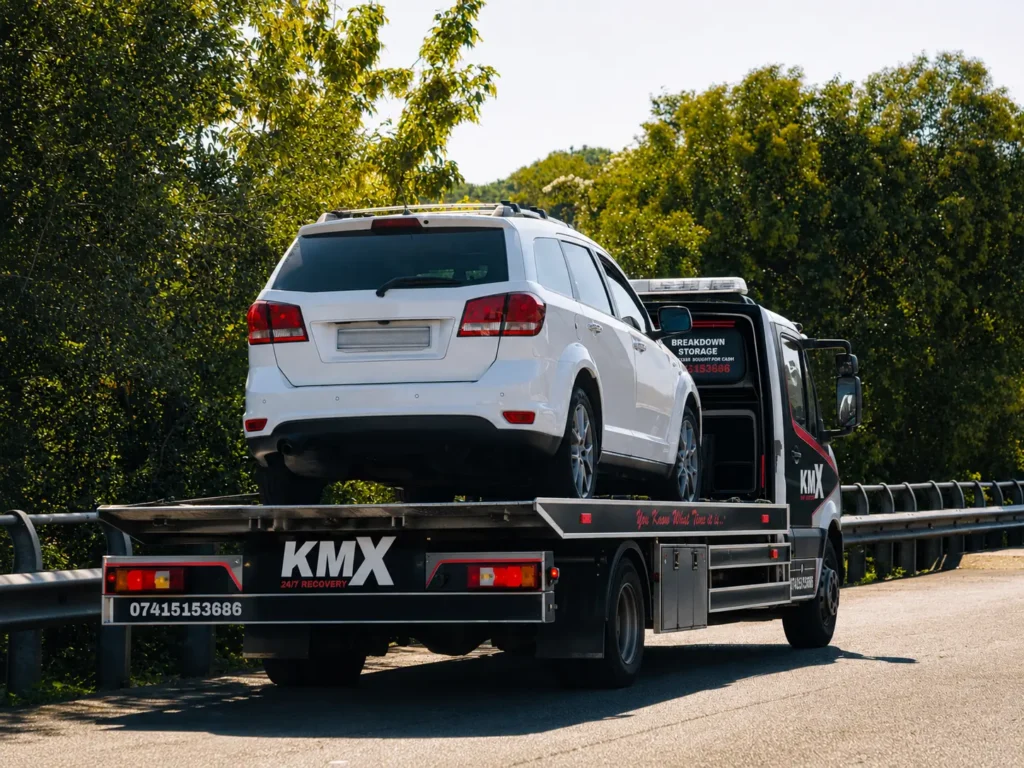
Whether you should leave the vehicle depends on where it has stopped and whether you can exit without stepping into moving traffic. If the car is on a hard shoulder, verge, lay by or emergency area and you can get out safely on the left, leave the car and wait behind a safety barrier.
Everyone should move well away from the vehicle. Children should remain under close supervision, and pets should be kept controlled. Do not stand directly behind your car because another vehicle could collide with it and push it forwards.
Stay in your vehicle with your seat belt fastened if it is stopped in a live traffic lane and leaving would require you to step into traffic. Switch on your hazard warning lights and call the emergency services. The priority is not simply to leave the car, but to choose the action that creates the least immediate risk.
Call 999 if your vehicle is stopped in a live lane, you cannot reach a safe place, someone is injured, you have been involved in a collision or the breakdown is creating an immediate danger. Ask for the police and give as much information as possible about your location and situation.
An emergency telephone should be used when you are safely stopped in an emergency area or beside a motorway. These phones connect directly to the relevant highway control centre and help the operator identify your location. If you don’t have a mobile phone, you must use the emergency telephone where one is accessible without placing yourself at risk.
Some newer vehicles have an eCall SOS button. This contacts a 999 operator and can transmit the vehicle’s location, but it should only be activated when emergency services are genuinely required. People with hearing or speech difficulties can also register for the 999 text service in advance.
The Highway Code says that, on an ordinary road, you may put a warning triangle on the road at least 45 metres, or 147 feet, behind your broken down vehicle when it is safe to do so. It should be placed on the same side of the road as the vehicle.
However, you must never use a warning triangle on a motorway. Walking along the hard shoulder to place or retrieve it would expose you to unnecessary danger. Do not place a warning triangle on the road if doing so requires you to walk close to a live traffic lane.
On a dual carriageway that is not classified as a motorway, only place the triangle when there is enough separation from traffic and good visibility. Your own safety is more important than positioning the warning device. Hazard warning lights should remain your primary way of alerting approaching drivers.
Your breakdown provider, traffic officers or emergency services need an accurate location before assistance can be dispatched. Check nearby signs, junction numbers, landmarks and your direction of travel. Driver location signs and marker posts can be especially helpful on the motorway network.
Marker posts or driver location signs contain numbers and letters identifying the road and position. When speaking to the operator, quote the numbers and letters exactly as shown. Also explain whether you are on the hard shoulder, in an emergency area or stopped in a live lane.
A mobile phone map can help, but do not rely on a postcode alone because it may cover a large section of highway. Report the road number, nearest junction and direction, such as northbound or southbound. Clear information allows the correct recovery vehicle or emergency response to find you more efficiently.
After you contact your breakdown cover provider, wait well away from the vehicle and carriageway whenever it is safe to do so. Stand behind a safety barrier and remain aware of traffic and flying debris. Do not return to the car to collect nonessential belongings.
Tell the breakdown provider about vulnerable passengers, mobility difficulties, young children or medical needs. You should also explain whether the car is in a live lane, on the hard shoulder or inside an emergency refuge area. These details help the provider understand the urgency and select the right recovery vehicle.
Do not attempt a repair unless you are completely separated from traffic and it is genuinely safe. Even apparently simple jobs can expose you to fast moving vehicles. Wait for trained recovery staff, traffic officers or emergency services to manage the hazard and move the vehicle safely.
Before a long journey, check your tyres, lights, oil, coolant, fuel or battery charge. Address any warning light before entering a dual carriageway or motorway. Routine maintenance and basic vehicle standards cannot prevent every fault, but they reduce the likelihood of an avoidable breakdown.
Keep a charged mobile phone, reflective clothing, a torch and your breakdown cover details in the car. Save your breakdown provider’s number and the National Highways contact number. You may also choose to get breakdown cover before travelling rather than trying to arrange assistance at the roadside.
Passengers should understand what to do if the vehicle stops on a high speed road. Knowing when to use an SOS phone, where to wait and when to call for help can reduce confusion during a stressful incident. Preparation allows everyone to focus on staying safe rather than searching for information after the car breaks down.
When your car breaks down on a high speed road, your immediate decisions can make a significant difference to your...
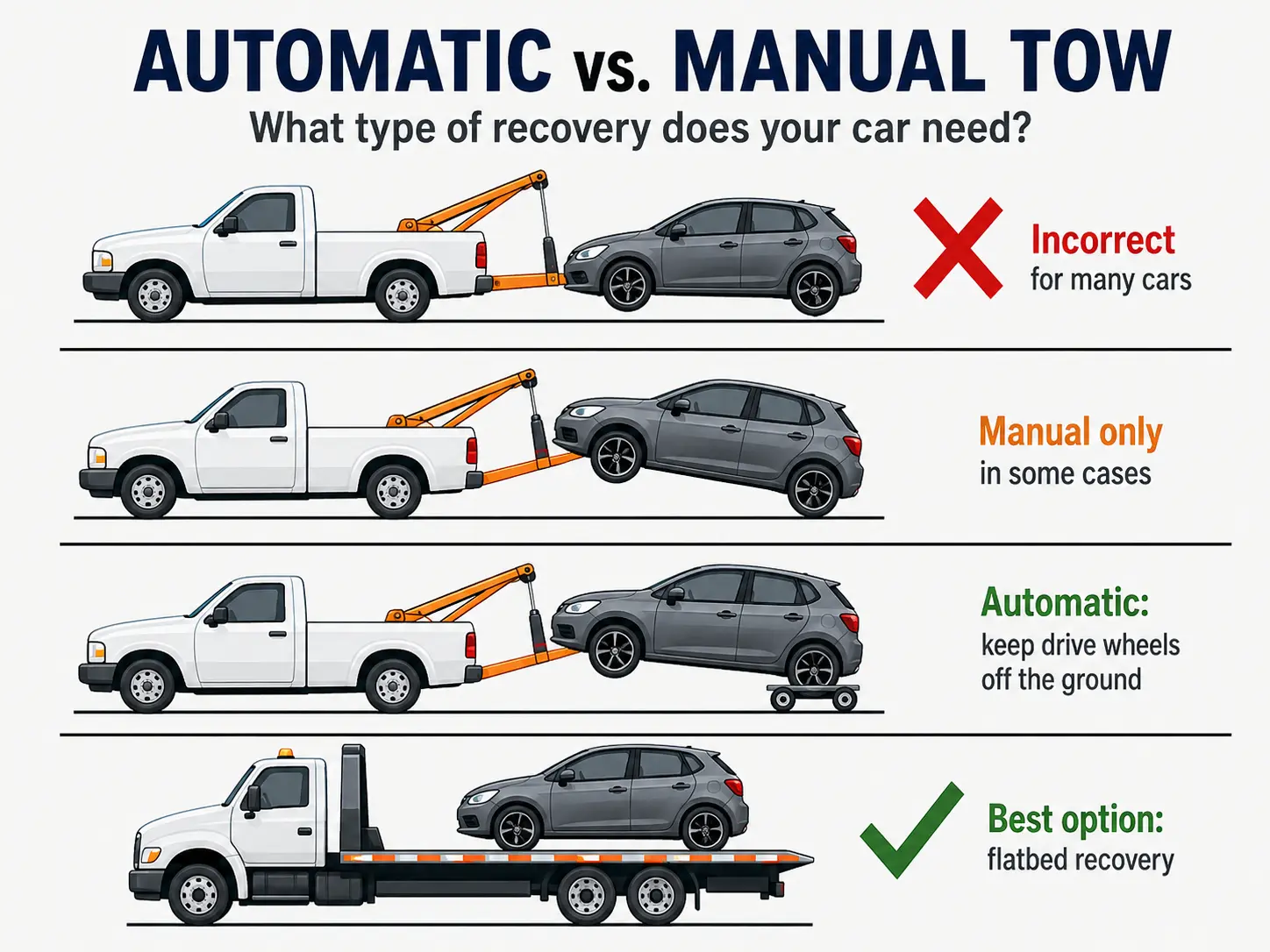
Choosing the wrong way to tow a car can turn a straightforward breakdown into an expensive gearbox repair. Automatic and...
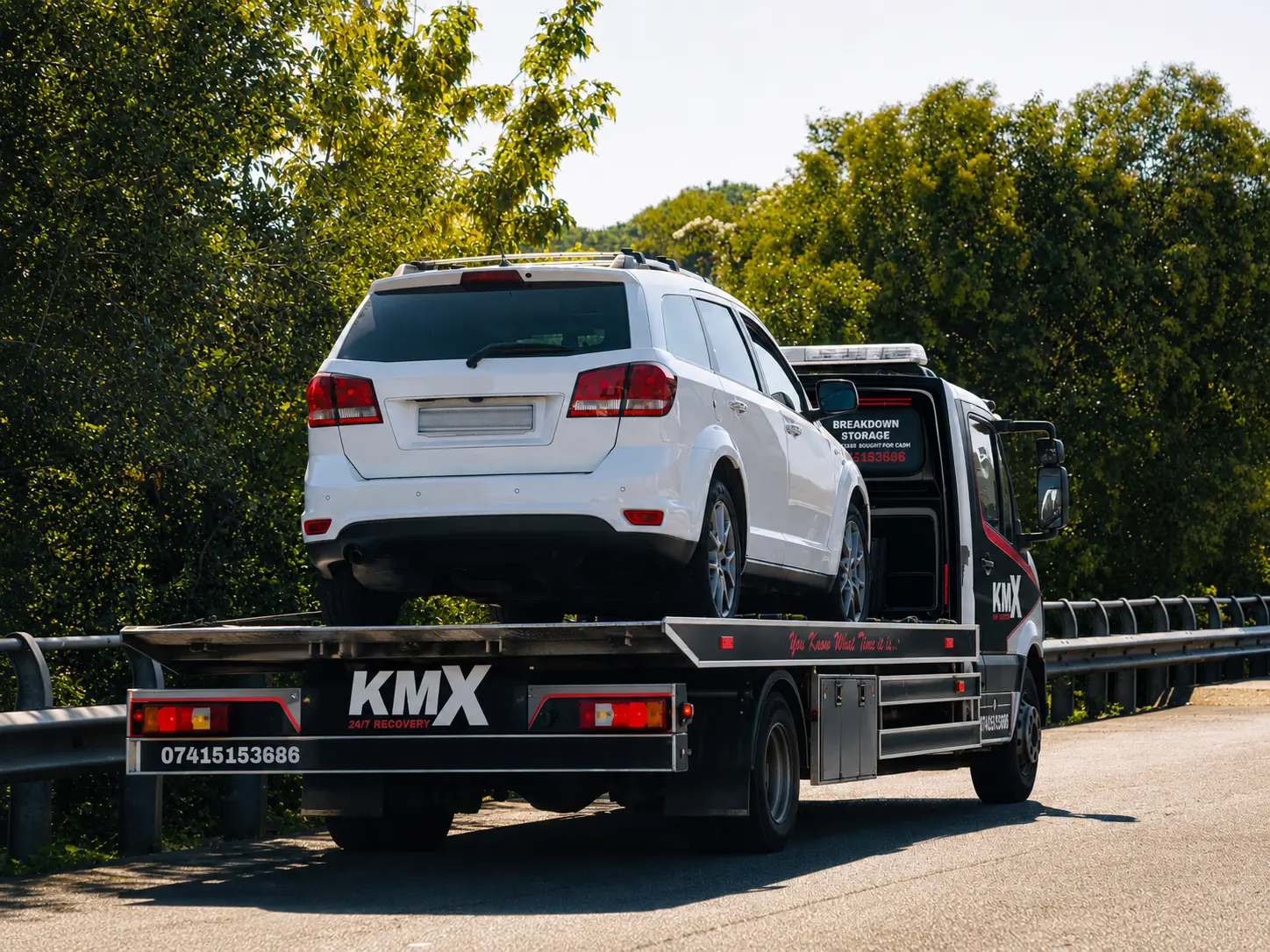
A vehicle breakdown can happen at the worst possible time, whether you are in Bury town centre, travelling towards Manchester...
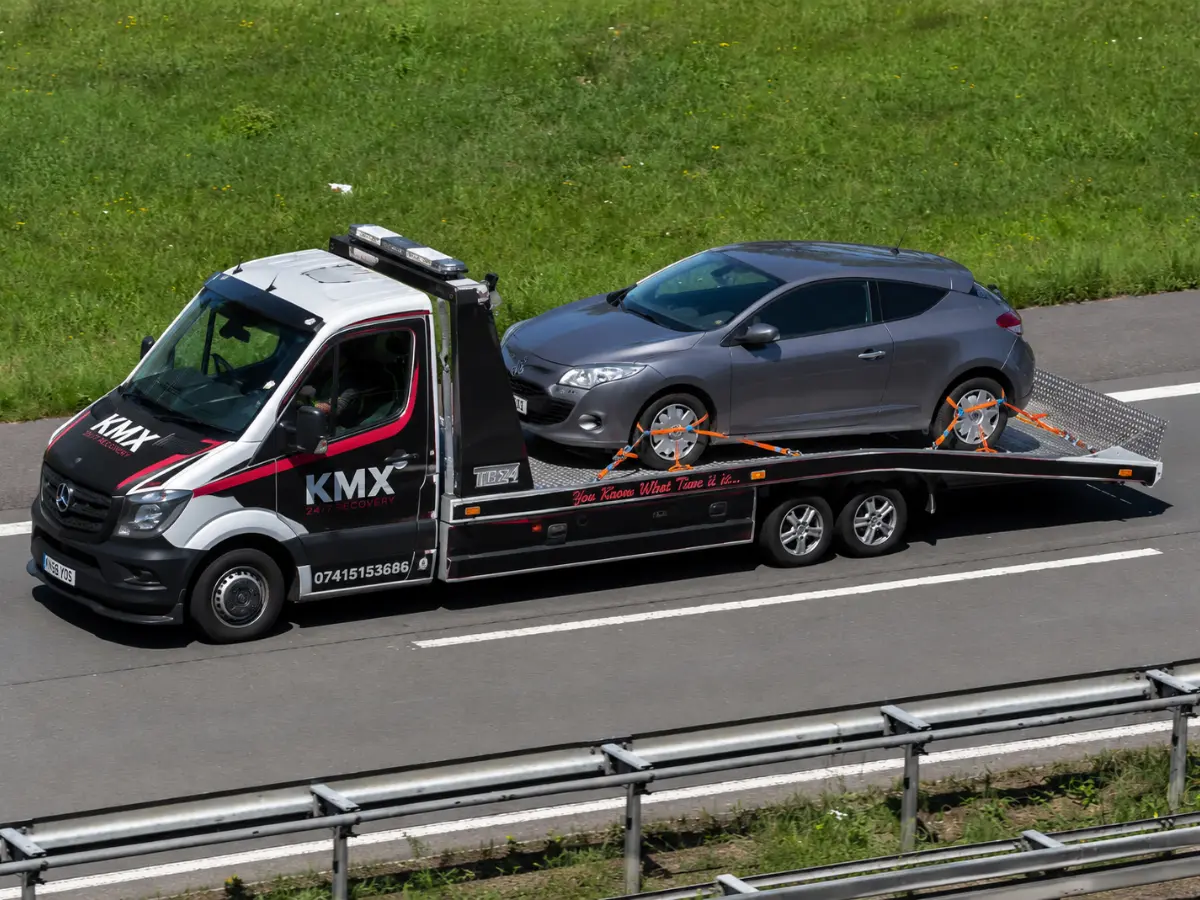
A breakdown is inconvenient at any time, but it can become far more stressful during a bank holiday when roads...
Get in touch with our friendly team whether you’re a car-trader or someone in need, we’re here to help!
0161 524 1047
hey@kmxrecovery.co.uk